3 min read · November 9, 2027
Why Two Calculators Give Different Answers for the Same Percentage
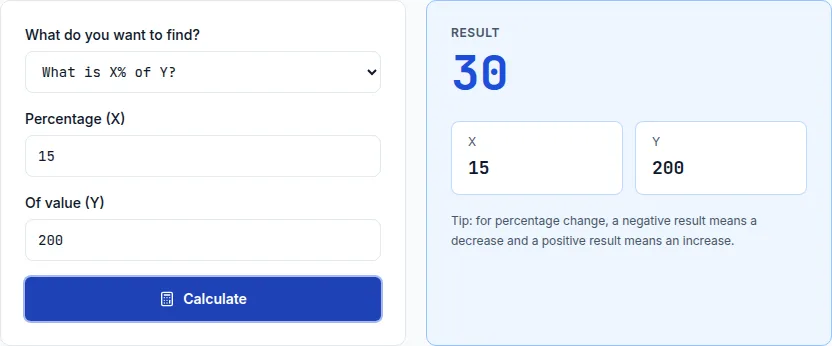
Two calculators rarely disagree on the actual math — 15% of 200 is 30, full stop, verified above. When results genuinely differ, it's almost always because the two tools were answering slightly different questions: one calculating a straight percentage, the other applying it to a different base number, rounding at a different step, or interpreting an ambiguous phrase differently.
The real math never actually disagrees
15% of 200 is 0.15 × 200 = 30, and any calculator that's actually computing that will return exactly 30 — there's no room for legitimate disagreement on a single, well-defined percentage-of-a-number question. When two tools show different numbers for what feels like 'the same' question, the question itself was usually ambiguous, not the arithmetic.
The most common real source of apparent disagreement: percentage change calculations, where '20% off then 20% off' or 'a 20% increase then a 20% decrease' genuinely depends on the order and what each percentage is calculated against — two calculators handling that sequencing differently will legitimately produce different (and both correct, for what they're each computing) answers.
The usual culprits when numbers really do differ
Different base numbers: is the percentage being applied to the pre-tax subtotal, the post-tax total, or an amount that already includes a service fee? Same percentage, genuinely different dollar result depending on the base. Rounding at different steps: rounding an intermediate result before continuing a multi-step calculation (like compound discounts or tax-then-tip) versus carrying full precision through to the end can produce small but real differences in the final cents.
Percentage points vs. percent: 'interest rates rose from 4% to 6%' is a 2 percentage point increase, but a 50% relative increase — a calculator (or a person) answering the percentage-point version of the question will give a different, equally correct number than one answering the relative-percent version, because they were never asked the identical question.
How to actually resolve a disagreement
Write out the exact numbers and exact operation in words before plugging anything in — 'what is 15% of 200' has one unambiguous answer; 'what's the new price after 20% off, then an extra 10% off' requires knowing whether the second 20% applies to the original price or the already-discounted price, which is a real design decision, not a math error, once you specify it precisely.
Once the question is fully specified with no ambiguity left in it, any correct calculator will agree with any other correct calculator — persistent disagreement after that point usually means one of the two tools has an actual bug, which is rare but does happen and is worth reporting if you find it.
Related guides
Put it into practice
The fastest way to learn the math is to play with the numbers.
Open the Percentage Calculator