
3 min read · September 21, 2027
BMI Calculator in Imperial Units: Feet, Inches, and Pounds
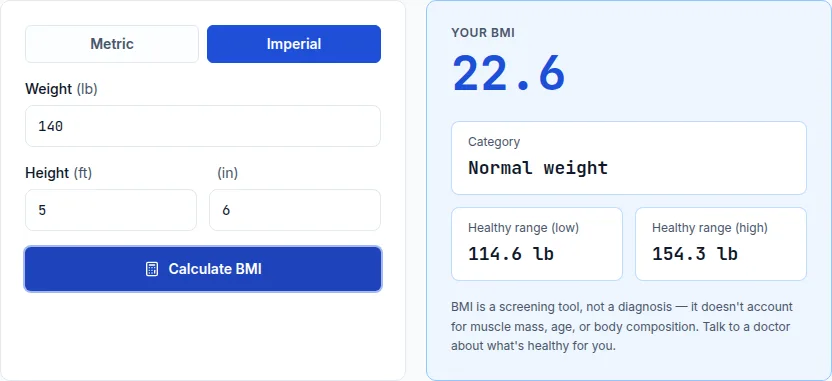
The imperial BMI formula is 703 × weight (lb) ÷ height (in)², which avoids converting to metric first. A 140 lb person who is 5'6" (66 inches) has a BMI of 703 × 140 ÷ 66² = 22.6, in the normal weight range.
The imperial formula and why 703
BMI = 703 × weight (lb) ÷ [height (in)]². The 703 constant exists purely to make the imperial formula produce the same result as the metric formula (kg ÷ m²) without requiring a unit conversion first — it's a conversion factor baked directly into the equation.
Worked example: 140 lb at 5'6" (66 inches). 703 × 140 = 98,420. 66² = 4,356. 98,420 ÷ 4,356 = 22.6 — comfortably in the 18.5–24.9 normal weight range.
The common height-conversion mistake
Height must be in total inches, not feet-and-inches combined — a very common error is plugging in '5.6' (as in 5 point 6) instead of converting 5'6" to 66 total inches (5 × 12 + 6). Those two numbers look deceptively similar but produce wildly different, wrong BMI results if the decimal form is used by mistake.
This calculator's imperial mode handles the feet-and-inches-to-total-inches conversion automatically behind the scenes — entering 5 feet and 6 inches as separate fields avoids the manual conversion step (and the mistake) entirely.
Metric and imperial always agree
Both formulas measure the identical thing and always produce the same BMI value for the same person — 140 lb at 5'6" and its metric equivalent (63.5 kg at 167.6 cm) both compute to a BMI of 22.6. Which formula to use is purely a matter of which units you already have on hand, not a choice that changes the result.
Related guides
Put it into practice
The fastest way to learn the math is to play with the numbers.
Open the BMI Calculator