
4 min read · January 26, 2027
The Real Annual Cost of Your Commute (Beyond Just Gas)
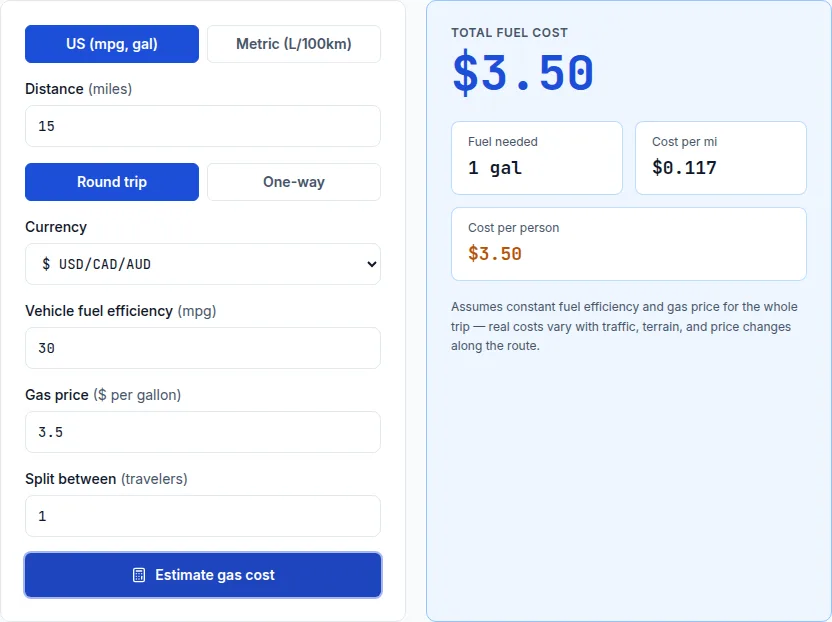
A daily round-trip commute's annual fuel cost is the round-trip cost multiplied by roughly 250 working days a year. A 15-mile one-way commute (30 miles round trip) at 30 mpg and $3.50/gallon costs about $3.50 a day in gas — which adds up to roughly $875 a year, before counting anything besides fuel.
From daily cost to annual cost
Set the round trip toggle on, enter your one-way commute distance (it doubles automatically), your car's mpg, and the local gas price — the result is your cost for one day's commute. Multiply that daily figure by roughly 250 (a typical number of working days after weekends, holidays, and vacation), and you have a realistic annual fuel estimate.
$3.50 a day × 250 working days ≈ $875 a year in gas alone for a modest 15-mile commute — a number most people have never actually added up, since it's easy to feel small day to day and easy to underestimate in aggregate.
What the fuel number leaves out
Extra mileage from commuting accelerates maintenance costs proportionally — more oil changes, faster tire wear, more frequent brake service — commonly estimated at another $0.08–$0.10 per mile on top of fuel for a typical gas car. At 30 miles a day, 250 days a year (7,500 commute miles), that's another $600–$750 annually in accelerated wear.
Parking, tolls, and increased insurance costs tied to higher annual mileage can add a comparable amount again depending on the city and route — a full commute cost picture is very often double the fuel-only number people mentally budget for.
When the math argues for an alternative
Once the full annual cost (fuel + maintenance + parking/tolls) is added up, it's a genuinely useful number to compare against a shorter commute, remote work, carpooling, or public transit — options that are easy to dismiss on a 'per day' basis but look different against a real $1,500–$2,000+ annual total.
This is also the right total to compare against an EV's lower per-mile cost if a commute makes up the bulk of your annual driving — the fuel savings compound fastest for exactly this kind of high-frequency, predictable-distance driving.
Related guides
Put it into practice
The fastest way to learn the math is to play with the numbers.
Open the Gas Price Travel Estimator