
5 min read · August 11, 2026
Metric to Imperial Conversion: The Only Cheat Sheet You Need
Whether you're reading a recipe, a car spec sheet, or a weather forecast from another country, metric and imperial units collide constantly. A handful of memorized benchmarks covers almost every everyday situation.
Length: the numbers worth memorizing
1 inch = 2.54 cm exactly, 1 mile ≈ 1.6 km, 1 meter ≈ 3.3 feet, and 1 foot ≈ 30 cm. For quick mental conversion, multiplying kilometers by 0.6 gives a close-enough miles figure (10 km ≈ 6 miles), and the reverse — multiplying miles by 1.6 — works the same way.
These aren't rough approximations pulled from nowhere: the inch-to-centimeter relationship has been an exact legal definition since 1959, so precision work can rely on 2.54 without rounding error.
Weight: kilograms and pounds
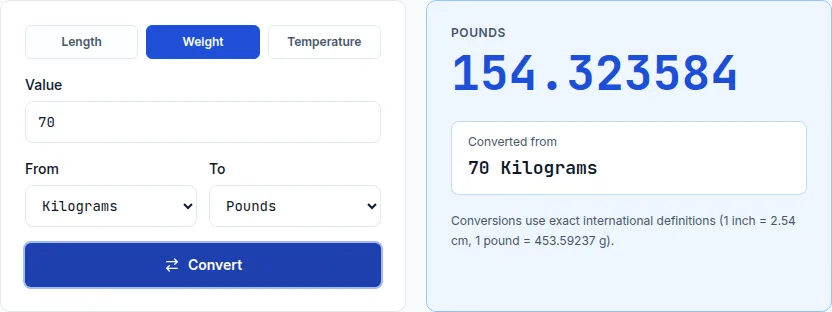
1 kg ≈ 2.2 lb is the single most useful conversion factor for weight — double a kilogram figure and add a bit for a close pounds estimate (70 kg → 140 + a bit ≈ 154 lb, which is exact). Going the other way, dividing pounds by 2.2 gets you kilograms.
Cooking recipes often mix systems inconsistently — a European recipe might list grams for solids and milliliters for liquids while a US recipe uses cups and ounces — so having both the weight and volume conversions on hand avoids guesswork mid-recipe.
Temperature: the one that needs a formula, not just a ratio
Unlike length and weight, Celsius and Fahrenheit don't share a zero point, so a simple multiplier doesn't work. The formula is °F = °C × 9/5 + 32. Three landmarks worth memorizing outright: 0°C = 32°F (freezing), 37°C ≈ 98.6°F (body temperature), and 100°C = 212°F (boiling).
A fast mental approximation for everyday weather checking: double the Celsius figure and add 30 — it's not exact, but it's close enough to know whether to grab a jacket.
Put it into practice
The fastest way to learn the math is to play with the numbers.
Open the Unit Converter