5 min read · September 8, 2026
Compound Interest Works Both Ways: Why It's Brutal on Debt
Compound interest gets celebrated as the engine behind long-term savings growth — but the exact same math works against you on debt, especially credit cards, where rates are high and minimum payments are deliberately small.
Why minimum payments barely move the balance
Credit card interest is typically compounded daily and charged monthly, often at 20%+ APR. A minimum payment is usually calculated as a small percentage of the balance (commonly 1–3%) plus that month's interest — meaning a large share of every minimum payment just covers interest that already accrued, leaving little to reduce principal.
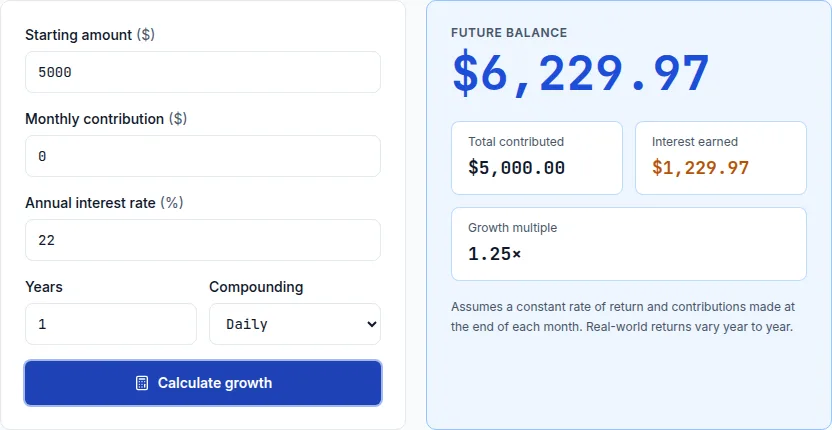
On a $5,000 balance at 22% APR, paying only the minimum can take well over a decade to clear and cost more in interest than the original balance itself — the same exponential math that doubles savings works just as relentlessly in reverse.
The interest rate gap that decides everything
This is why financial advice consistently prioritizes paying off high-interest debt before investing: a guaranteed 20%+ 'return' from eliminating credit card interest beats almost any realistic investment return, and it carries zero market risk. Lower-rate debt (a mortgage in the 4–7% range, for instance) doesn't carry the same urgency, since long-term investment returns have historically outpaced rates in that range.
The break-even logic is simple: pay off any debt whose interest rate exceeds what you could reliably earn investing that same money instead.
Two payoff strategies, same underlying math
The 'avalanche' method pays extra toward the highest-interest debt first, which is mathematically optimal — it minimizes total interest paid. The 'snowball' method pays off the smallest balance first regardless of rate, which pays more in interest overall but delivers faster psychological wins that help some people stay consistent.
Either way, the core lever is the same: every extra dollar applied to principal stops compounding against you immediately, which is why even small additional payments early in a high-interest balance make an outsized difference.
Put it into practice
The fastest way to learn the math is to play with the numbers.
Open the Compound Interest Calculator